For research and laboratory use only. Not for human or animal consumption. Not intended for diagnostic, therapeutic, or clinical use.
BPC-157
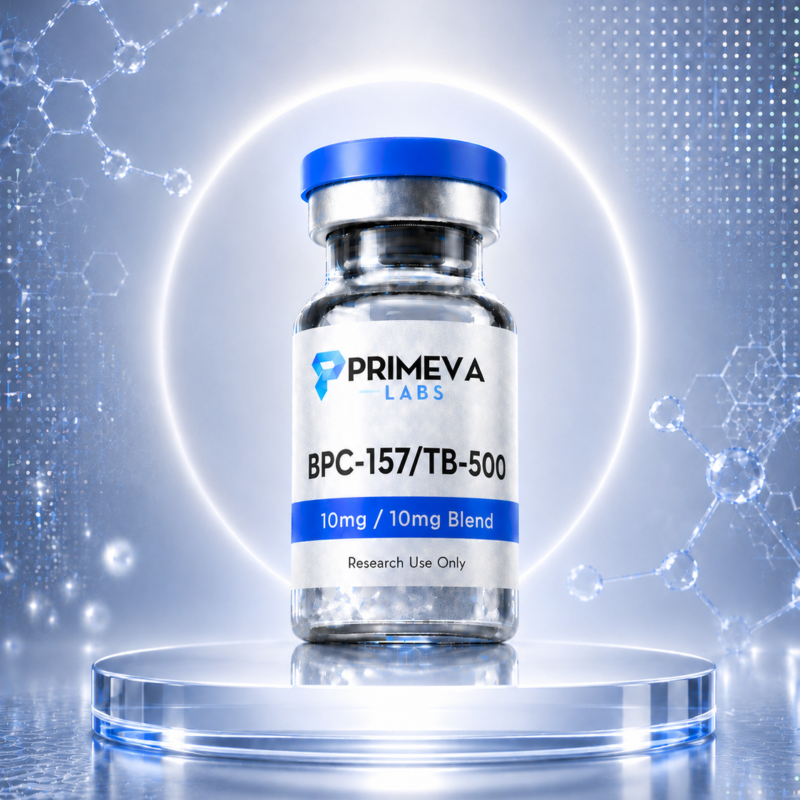
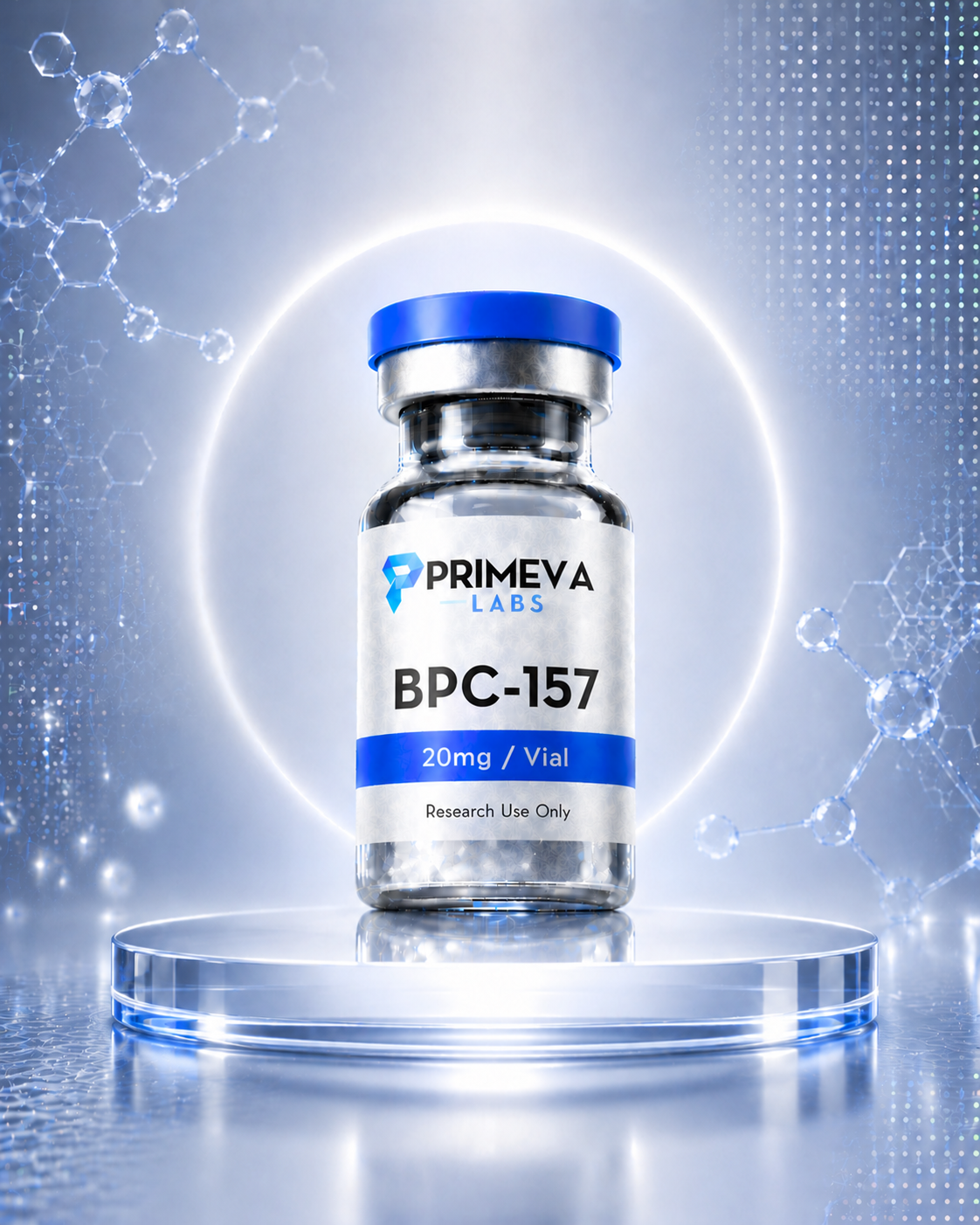
BPC-157 from Primeva Labs is offered strictly for research use only. Each order includes batch-specific CoA documentation, quality verification, and secure online ordering. Not for human or animal consumption.
Primeva Labs supplies materials strictly for laboratory and research use. Create a complimentary research account to view current pricing, availability, and ordering.
By creating an account you confirm you are 21+, agree to the Terms & Research-Use Disclaimer, and acknowledge these products are sold strictly for research use — not for human or animal consumption.
What Is BPC-157?
BPC-157 (Body Protection Compound-157) is a synthetic, stable pentadecapeptide studied across tissue-repair, angiogenesis, and cytoprotection research models.
- 15-amino-acid sequence (GEPPPGKPADDAGLV) — a partial sequence of a protein found in human gastric juice
- Highly stable in aqueous solution and resistant to enzymatic degradation
- A frequent subject of tendon, ligament, gut-lining, and angiogenesis research
- Supplied strictly as a research-grade reference material for laboratory use
Research Applications
Tendon, ligament & muscle repair
Studied in connective-tissue models for fibroblast outgrowth, cell survival under oxidative stress, and directed cell migration.
Gastrointestinal research
Frequently referenced in mucosal-integrity, gut-lining, and cytoprotection studies in preclinical models.
Angiogenesis research
Investigated for its influence on new blood-vessel formation in injury and ischemia models.
Bone & soft-tissue healing
Examined alongside standard angiogenic growth factors across tendon, ligament, muscle, and bone healing research.
Proposed Mechanisms
VEGFR2 / Akt-eNOS signaling
Preclinical studies associate BPC-157 with upregulation of vascular-endothelial growth-factor receptor-2 and downstream nitric-oxide (Akt-eNOS) signaling linked to angiogenesis.
FAK-paxillin pathway
Implicated in the directed cell-migration effects observed in tendon-fibroblast research.
Growth-hormone-receptor expression
Shown in vitro to upregulate growth-hormone-receptor expression in tendon fibroblasts, a proposed route to enhanced cell proliferation.
Nitric-oxide system modulation
Studied for balanced modulation of the NO system in vascular and cytoprotection models.
Mechanisms described above are derived from preclinical (cell and animal) research. Human data remain limited, and nothing here should be read as a clinical or therapeutic claim.