For research and laboratory use only. Not for human or animal consumption. Not intended for diagnostic, therapeutic, or clinical use.
TB-500
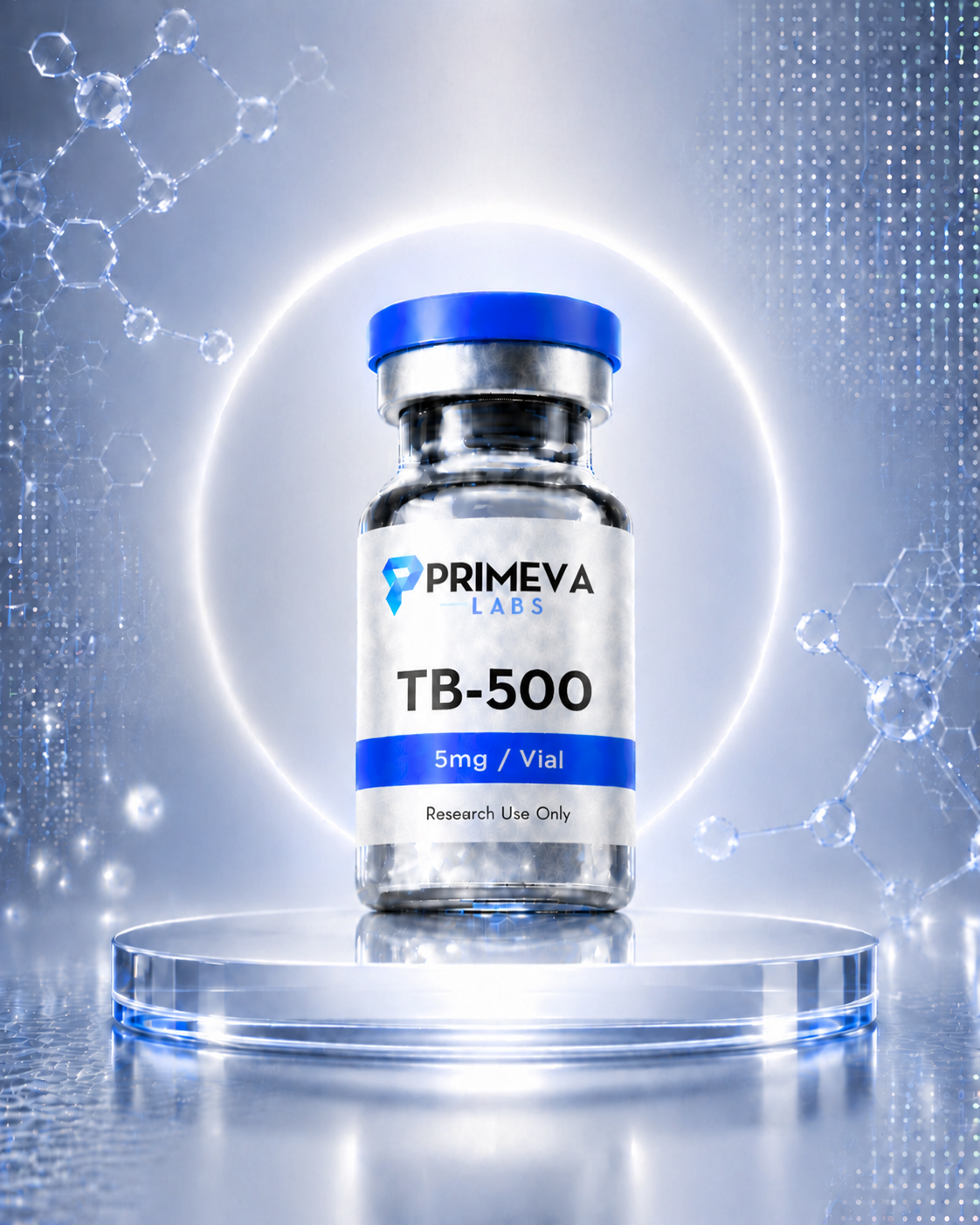
TB-500 from Primeva Labs is offered strictly for research use only. Each order includes batch-specific CoA documentation, quality verification, and secure online ordering. Not for human or animal consumption.
Primeva Labs supplies materials strictly for laboratory and research use. Create a complimentary research account to view current pricing, availability, and ordering.
By creating an account you confirm you are 21+, agree to the Terms & Research-Use Disclaimer, and acknowledge these products are sold strictly for research use — not for human or animal consumption.
What Is TB-500?
TB-500 is a synthetic peptide based on Thymosin Beta-4, a naturally occurring actin-binding protein studied across cell-migration, angiogenesis, and tissue-repair research.
- Synthetic fragment modeled on Thymosin Beta-4, a 43-amino-acid regulatory peptide
- Studied for actin regulation, cell migration, and new-vessel formation
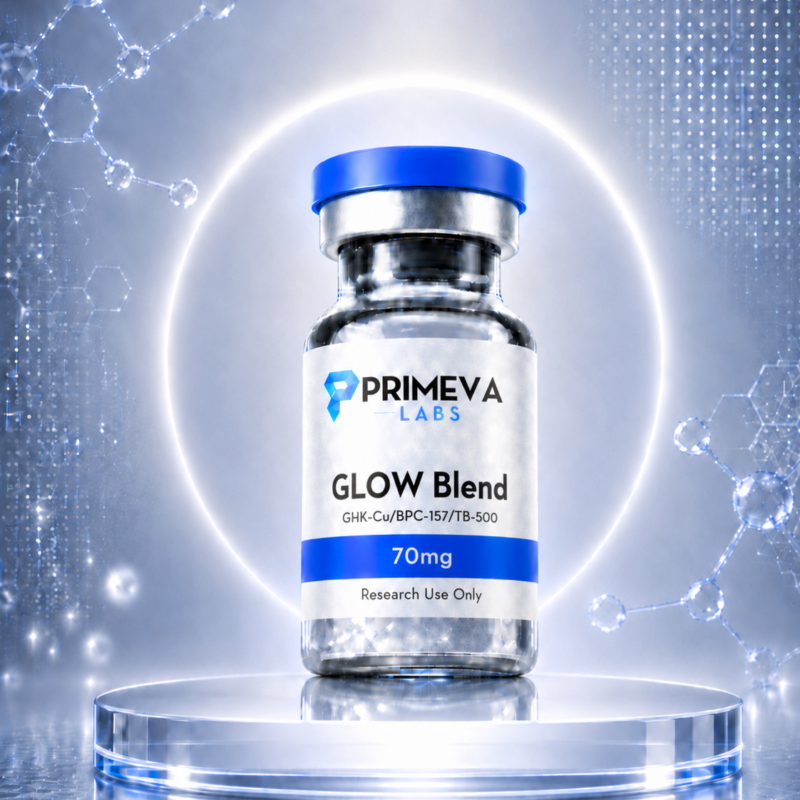
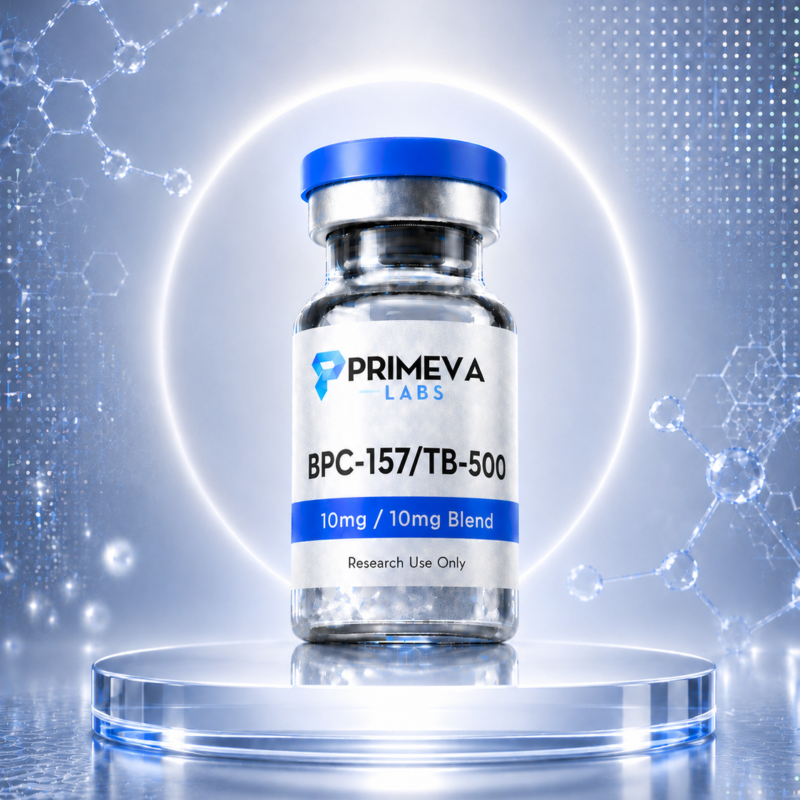
- Frequently paired with BPC-157 in recovery-model research
- Supplied strictly as a research-grade reference material
Research Applications
Tissue remodeling & wound models
Studied for re-epithelialization and cell migration in injury and wound-repair research.
Angiogenesis research
Investigated for its influence on new blood-vessel formation in preclinical models.
Cardiac & ischemic models
Examined for cell survival and repair signaling in models of ischemic injury.
Inflammation research
Explored for modulation of inflammatory signaling during tissue repair.
Proposed Mechanisms
Actin sequestration
Binds and sequesters G-actin, a proposed basis for its effects on cytoskeletal dynamics and cell migration.
Angiogenic signaling
Associated in preclinical work with promotion of endothelial migration and new-vessel formation.
Cell survival pathways
Linked to integrin-linked kinase activation and reduced apoptosis in cardiac-injury models.
Anti-inflammatory modulation
Studied for down-regulation of inflammatory mediators during tissue remodeling.
Mechanisms described above are drawn from preclinical (cell and animal) research and, where noted, early clinical literature. They are provided for educational context and should not be read as clinical or therapeutic claims.