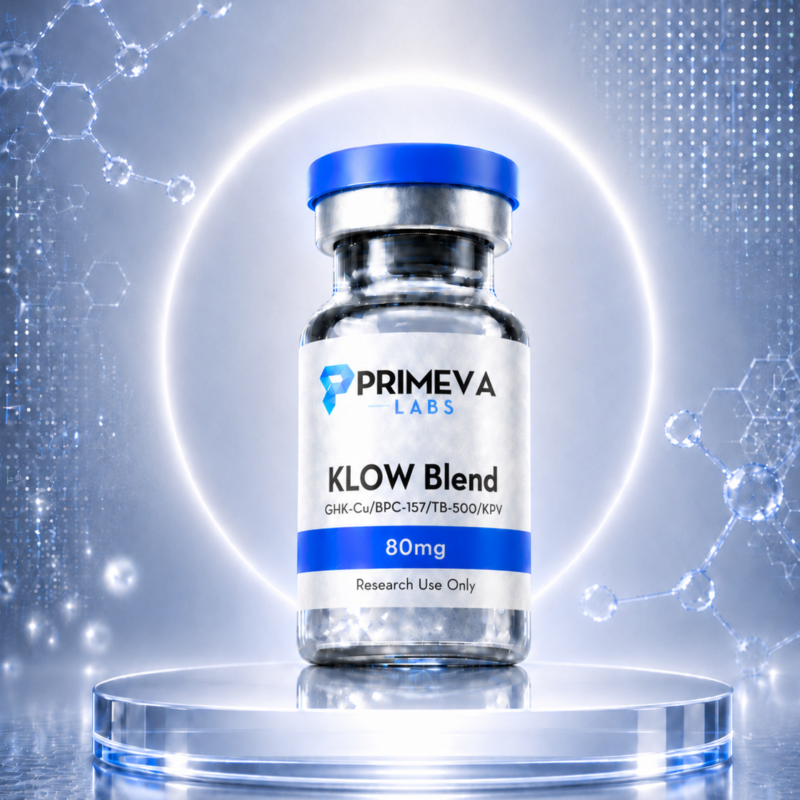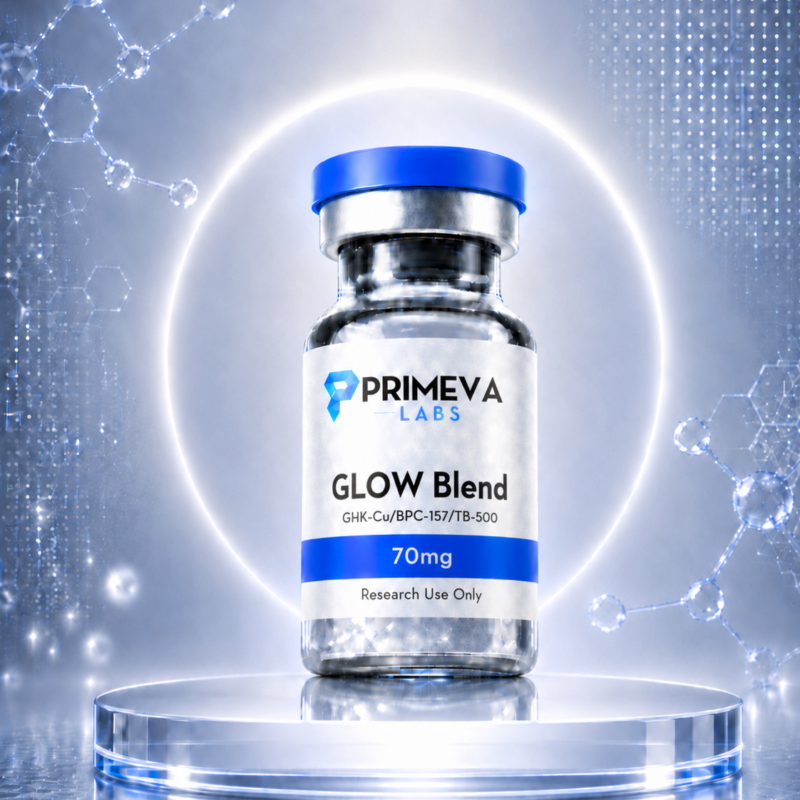
For research and laboratory use only. Not for human or animal consumption. Not intended for diagnostic, therapeutic, or clinical use.
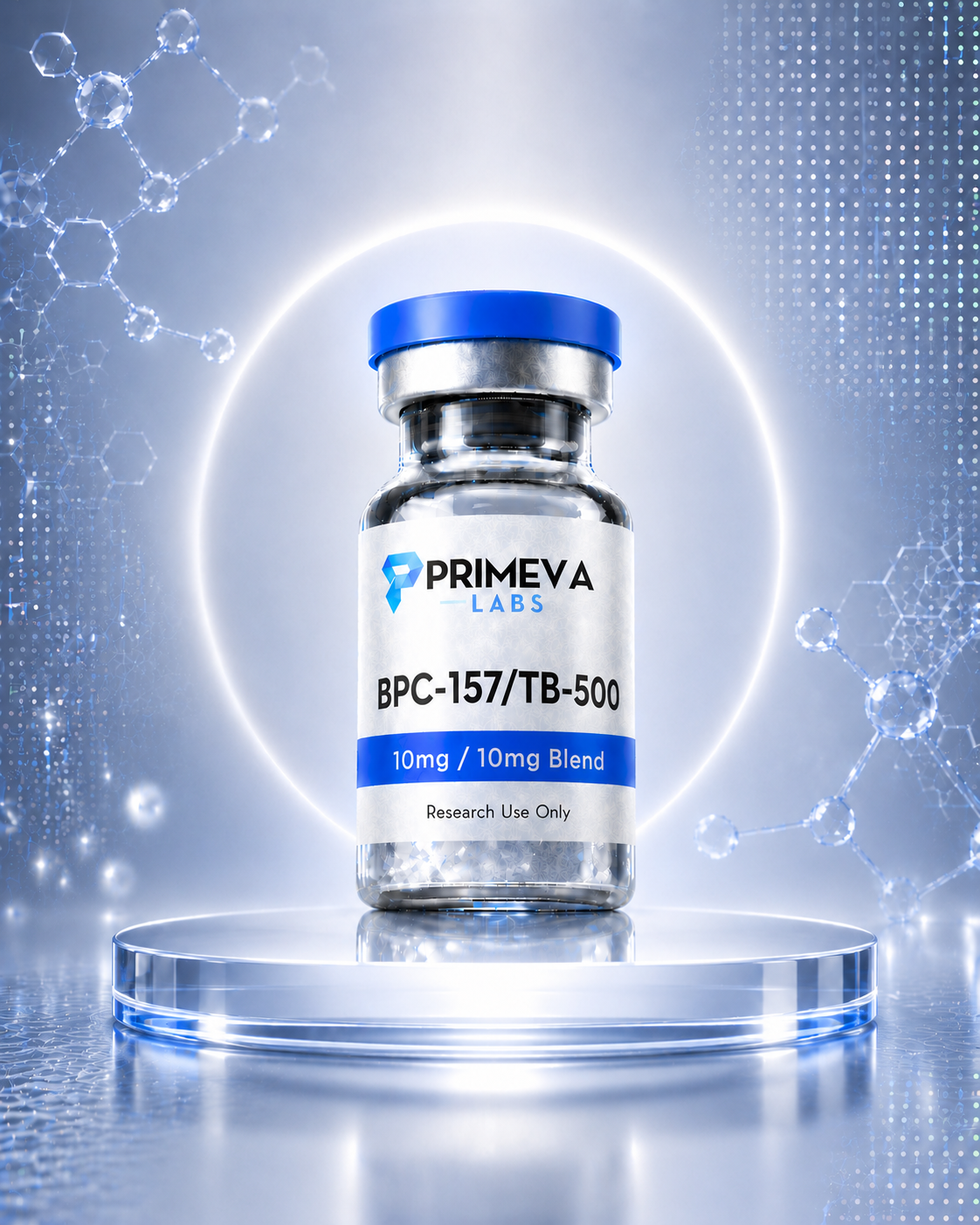
BPC-157/TB-500
BPC-157/TB-500 from Primeva Labs is offered strictly for research use only. Each order includes batch-specific CoA documentation, quality verification, and secure online ordering. Not for human or animal consumption.
Primeva Labs supplies materials strictly for laboratory and research use. Create a complimentary research account to view current pricing, availability, and ordering.
By creating an account you confirm you are 21+, agree to the Terms & Research-Use Disclaimer, and acknowledge these products are sold strictly for research use — not for human or animal consumption.
What Is BPC-157/TB-500?
This research blend co-lyophilizes BPC-157 and TB-500 (Thymosin Beta-4) in a single vial — two peptides frequently studied together for complementary tissue-repair mechanisms.
- Combines an angiogenesis-associated peptide (BPC-157) with an actin-regulating peptide (TB-500)
- Studied together in tendon, ligament, muscle, and wound-repair models
- Per-component assay reported on a batch-specific certificate
- Supplied strictly as a research-grade reference material
Research Applications
Combined recovery models
Studied as a pairing in connective-tissue and musculoskeletal recovery research.
Angiogenesis + remodeling
Examined for complementary effects on new-vessel formation and tissue remodeling.
Wound-healing research
Investigated for re-epithelialization and cytoprotection in injury models.
Synergy research
Explored for whether the two peptides act on distinct, complementary pathways.
Proposed Mechanisms
BPC-157: angiogenic/cytoprotective
Associated with VEGFR2/Akt-eNOS signaling and cytoprotection in preclinical models.
TB-500: actin & migration
Sequesters G-actin and is linked to endothelial migration and angiogenesis.
Complementary repair
The two are proposed to address overlapping but distinct stages of tissue repair.
Anti-inflammatory modulation
Both peptides are studied for modulation of inflammatory signaling during healing.
Mechanisms described above are drawn from preclinical (cell and animal) research and, where noted, early clinical literature. They are provided for educational context and should not be read as clinical or therapeutic claims.